
PLONVIT® KALI
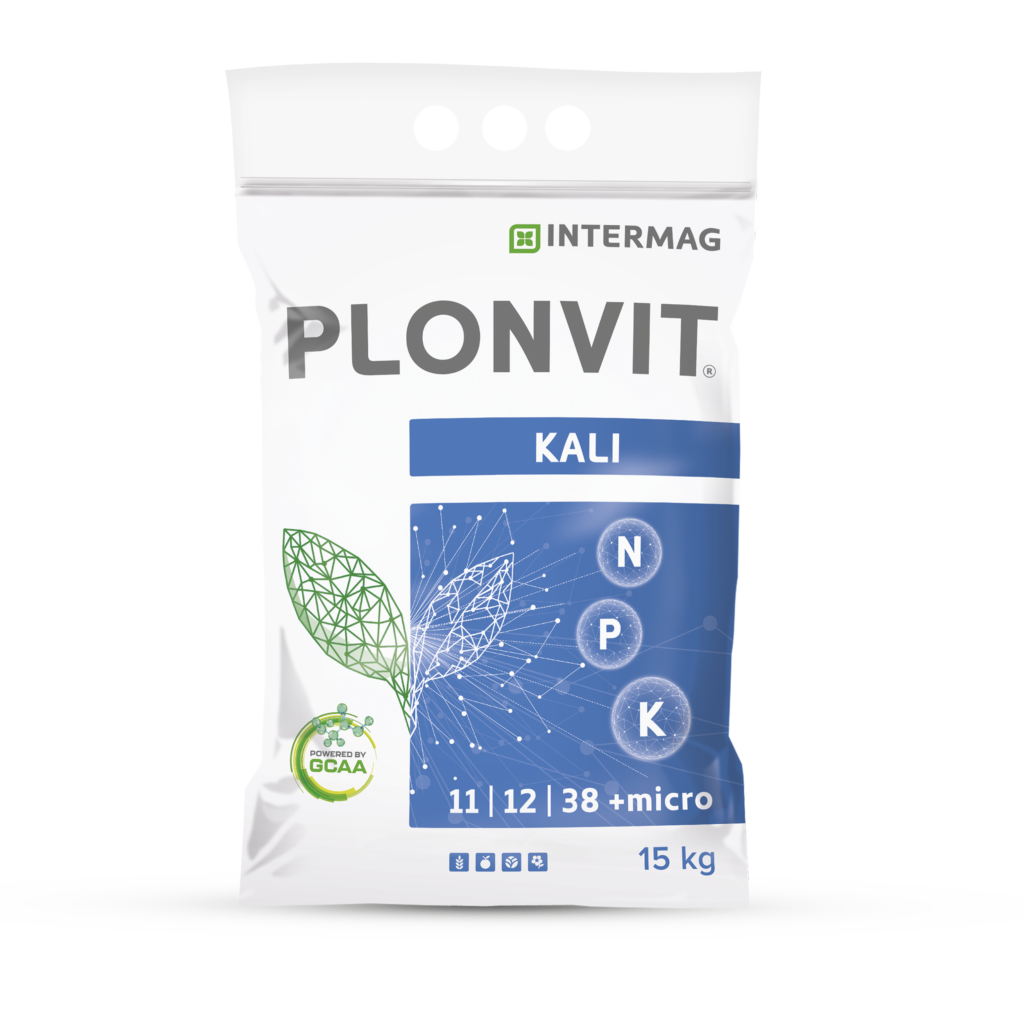
PLONVIT® KALI
Fertilizante foliar NPK cristalino y soluble en agua con alta concentración de nutrientes, con la mayoría de potasio
Descripción del producto
PLONVIT® KALI es un fertilizante NPK cristalino, soluble en agua (11/12/38) con micronutrientes, destinado a la aplicación foliar. También se puede utilizar para preparar una solución nutritiva para la fertirrigación de cultivos en el suelo.
PLONVIT® KALI nutre eficazmente las plantas, apoya su correcto desarrollo y tiene un efecto beneficioso en el aumento de la resistencia de las plantas a la sequía y las bajas temperaturas.
Se recomienda especialmente durante los períodos de mayor demanda de potasio de las plantas, durante los períodos de crecimiento intensivo, desarrollo, floración y formación de rendimiento, así como en condiciones de déficit hídrico y baja temperatura.
PLONVIT® KALI aplicado foliarmente en los momentos y dosis recomendados en los programas de alimentación foliar para especies vegetales individuales, complementa y/o corrige eficazmente la fertilización del suelo.
PLONVIT® KALI contiene la tecnología patentada GCAA, que combina microelementos con el aminoácido glicina. La glicina es el aminoácido más pequeño y móvil de las plantas. Como resultado, los micronutrientes unidos a la glicina proporcionan nutrientes de manera más rápida y efectiva que las sales minerales, los óxidos o los fertilizantes basados en otros agentes complejantes.
| Nutrientes | g/kg | % (m/m) |
| Nitrógeno (N) total | 110 | 11.0 |
| Nitrato de nitrógeno (N) (NO3) | 83 | 8.3 |
| Nitrógeno (N) amonio (NH2) | 27 | 2.7 |
| El pentóxido de fósforo (P2O5) total | 120 | 12.0 |
| El pentóxido de fósforo (P2O5) soluble en agua | 120 | 12.0 |
| El pentóxido de fósforo (P2O5) soluble en solución neutra de citrato de amonio | 120 | 12.0 |
| Óxido de potasio (K2O) soluble en agua | 380 | 38.0 |
| Boro (B) en forma de sal de sodio | 0.3 | 0.03 |
| Cobre (Cu) como glicinato | 0.3 | 0.030 |
| Hierro (Fe) quelado por EDTA | 1.5 | 0.15 |
| Manganeso (Mn) como glicinato | 0.7 | 0.07 |
| Molibdeno (Mo) en forma de sal de amonio | 0.02 | 0.002 |
| Zinc (Zn) como glicinato | 0.7 | 0.070 |
Instrucciones de uso
PLONVIT® KALI se puede utilizar en diferentes técnicas de fertilización, incluidas las pulverizaciones foliares y la fertirrigación en el suelo.
- PULVERIZACIONES FOLIARES
PLONVIT® KALI está destinado a la aplicación foliar en forma de solución acuosa. PLONVIT® KALI se puede utilizar junto con otros agroquímicos después de realizar una prueba de miscibilidad. Las recomendaciones detalladas para la aplicación foliar se presentan en la siguiente tabla. - FERTIRRIGACIÓN (fertilización con riego) de cultivos en el suelo, en sustratos de turba y suelos de jardín (la solución nutritiva se administrará periódicamente, repetidamente durante la temporada de crecimiento).
Las recomendaciones específicas (composición de la solución nutritiva y frecuencia de aplicación) tendrán en cuenta las necesidades nutricionales de los vegetales, los resultados del análisis químico del agua utilizada para la fertirrigación y del suelo (sustrato), así como las condiciones meteorológicas.
Utilizar PLONVIT® KALI como solución acuosa a una concentración del 0,03-0,2% (0,3-2,0 kg de fertilizante en 1.000 litros de solución nutritiva lista para usar).
Cuando utilice PLONVIT® KALI en una solución nutritiva junto con otros fertilizantes, no exceda una concentración combinada del 0,2% de todos los ingredientes de la solución que se dosifica.
Al preparar soluciones concentradas, la dosis de fertilizante se incrementará en consecuencia.
Preparar soluciones concentradas de fertilizantes PLONVIT NPK en un tanque diferente al de la solución concentrada de fertilizante cálcico.
Anuncio 1. Recomendaciones de aplicación foliar para cultivos seleccionados.
Las recomendaciones pueden modificarse teniendo en cuenta los requisitos y las condiciones de crecimiento de las plantas.
| Application times (◆ optimal, ◇ optional): | Direction for use: |
| ◆ Autumn: 3–6 leaves unfolded | 2–5 kg/ha |
| ◇ Spring: tillering | 2–5 kg/ha |
| ◆ stem elongation | 2–5 kg/ha |
| ◆ flag leaf stage / beginning of heading | 2–5 kg/ha |
| ◇/◆ end of flowering – until early milk The application time should be considered as optimal if the product was not used in flag leaf stage / beginning of heading. |
2–5 kg/ha |
| Application times (◆ optimal, ◇ optional): | Direction for use: |
| ◇ leaf development – tillering | 2–5 kg/ha |
| ◆ stem elongation | 2–5 kg/ha |
| ◆ flag leaf stage / beginning of heading | 2–5 kg/ha |
| ◇/◆ end of flowering – until early milk The application time should be considered as optimal if the product was not used in flag leaf stage / beginning of heading. |
2–5 kg/ha |
| Application times (◆ optimal, ◇ optional): | Direction for use: |
| ◆ Autumn: 3–6 leaves unfolded | 2–5 kg/ha |
| ◇ Spring: tillering | 2–5 kg/ha |
| ◆ stem elongation | 2–5 kg/ha |
| ◆ flag leaf stage / beginning of heading | 2–5 kg/ha |
| ◇/◆ end of flowering – until early milk The application time should be considered as optimal if the product was not used in flag leaf stage / beginning of heading. |
2–5 kg/ha |
| Application times (◆ optimal, ◇ optional): | Direction for use: |
| ◇ leaf development – tillering | 2–5 kg/ha |
| ◆ stem elongation | 2–5 kg/ha |
| ◆ flag leaf stage / beginning of heading | 2–5 kg/ha |
| ◇/◆ end of flowering – until early milk The application time should be considered as optimal if the product was not used in flag leaf stage / beginning of heading. |
2–5 kg/ha |
| Application times (◆ optimal, ◇ optional): | Direction for use: |
| ◇ Autumn: leaf development – until beginning of tillering | 2–5 kg/ha |
| ◇ Spring: beginning of stem elongation | 2–5 kg/ha |
| ◆ flag leaf stage – until first awns visible | 2–5 kg/ha |
| ◇/◆ end of flowering – until medium milk stage of grain ripening The treatment should be considered as optimal in case of periodic water shortage, as well as to improve quality parameters of grain and increase yield (extension of the grain filling period). |
2–5 kg/ha |
| Application times (◆ optimal, ◇ optional): | Direction for use: |
| ◇ leaf development – until beginning of stem elongation | 2–5 kg/ha |
| ◆ flag leaf stage – until first awns visible | 2–5 kg/ha |
| ◇/◆ end of flowering – until medium milk stage of grain ripening The treatment should be considered as optimal in case of periodic water shortage, as well as to improve quality parameters of grain and increase yield (extension of the grain filling period). |
2–5 kg/ha |
| Application times (◆ optimal, ◇ optional): | Direction for use: |
| ◇ Autumn: leaf development – until beginning of tillering | 2–5 kg/ha |
| ◇ Spring: beginning of stem elongation | 2–5 kg/ha |
| ◇/◆ flag leaf stage – until first awns visible The treatment should be considered as optimal in case of periodic water shortage. |
2–5 kg/ha |
| ◆ end of flowering – until medium milk stage of grain ripening | 2–5 kg/ha |
| Application times (◆ optimal, ◇ optional): | Direction for use: |
| ◇ leaf development – until beginning of stem elongation | 2–5 kg/ha |
| ◇/◆ flag leaf stage – until first awns visible The treatment should be considered as optimal in case of periodic water shortage. |
2–5 kg/ha |
| ◇ end of flowering – until medium milk stage of grain ripening | 2–5 kg/ha |
| Application times (◆ optimal, ◇ optional): | Direction for use: |
| ◇ Autumn: leaf development – until beginning of tillering | 2–5 kg/ha |
| ◇ Spring: beginning of stem elongation | 2–5 kg/ha |
| ◆ flag leaf stage – until beginning of heading | 2–5 kg/ha |
| ◇ end of flowering – until early milk | 2–5 kg/ha |
| Application times (◆ optimal, ◇ optional): | Direction for use: |
| ◇ leaf development – until beginning of stem elongation | 2–5 kg/ha |
| ◆ flag leaf stage – until beginning of heading | 2–5 kg/ha |
| ◇ end of flowering – until early milk | 2–5 kg/ha |
| Application times (◆ optimal, ◇ optional): | Direction for use: |
| ◇ leaf development – tillering | 2–5 kg/ha |
| ◆ stem elongation – until flag leaf stage | 2–5 kg/ha |
| ◇ end of flowering – until early milk | 2–5 kg/ha |
| Application times (◆ optimal, ◇ optional): | Direction for use: |
| Autumn: ◆ 4–8 leaves unfolded |
2–5 kg/ha |
| Spring: ◆ beginning of main stem elongation |
2–5 kg/ha |
| ◇/◆ bud formation – until beginning of flowering The treatment should be considered as optimal in case of water scarcity. |
2–5 kg/ha |
| ◆ from the beginning of petal fall – until the beginning of pods development | 2–5 kg/ha |
| Application times (◆ optimal, ◇ optional): | Direction for use: |
| ◆ leaf development – until beginning of main stem elongation | 2–5 kg/ha |
| ◇/◆ bud formation – until beginning of flowering The treatment should be considered as optimal in case of water scarcity. |
2–5 kg/ha |
| ◆ from the beginning of petal fall – until the beginning of pods development | 2–5 kg/ha |
| Application times (◆ optimal, ◇ optional): | Direction for use: |
| ◇ 3–4 pairs of leaves (BBCH 16–18) | 2–5 kg/ha |
| ◆ beginning of stem elongation (BBCH 30–33) | 2–5 kg/ha |
| ◆ beginning of inflorescence development (BBCH 51–55) | 2–5 kg/ha |
| Application times (◆ optimal, ◇ optional): | Direction for use: |
| ◇ leaf development on the main stem (BBCH 14–16) | 2–5 kg/ha |
| ◆ stem growth (BBCH 30–39) | 2–5 kg/ha |
| ◆ beginning of inflorescence development until beginning of flowering (BBCH 51–61) | 2–5 kg/ha |
| Application times (◆ optimal, ◇ optional): | Direction for use: |
| ◆ 7–8 leaves unfolded | 2–5 kg/ha |
| ◆ stem elongation – until beginning of tassel formation | 2–5 kg/ha |
| ◇/◆ tassel and ear (cob) emergence The application time should be considered as optimal in case of technical possibilities to carry out the foliar treatments. |
2–5 kg/ha |
| Application times (◆ optimal, ◇ optional): | Direction for use: |
| ◇ beginning of leaf development | 2–5 kg/ha |
| ◆ beginning of crop cover | 2–5 kg/ha |
| ◆ beginning of storage root development | 2–5 kg/ha |
| ◇ 14–21 days after beginning of storage root development | 2–5 kg/ha |
| Application times (◆ optimal, ◇ optional): | Direction for use: |
| ◇ growth of shoots and leaves (plant height ˃15 cm) | 2–5 kg/ha |
| ◆ beginning of tuber growth | 2–5 kg/ha |
| ◆ tuber growth: 2–3 treatments every 14–21 days | 2–5 kg/ha |
| ◆ the beginning of drying up of shoots | 2–5 kg/ha |
| Application times (◆ optimal, ◇ optional): | Direction for use: |
| ◇/◆ beginning of growth of shoots The application time should be considered as optimal in case of periodic water shortage. |
2–5 kg/ha |
| ◆ beginning of flower bud development | 2–5 kg/ha |
| ◆ beginning of pod and seed development | 2–5 kg/ha |
| Application times (◆ optimal, ◇ optional): | Direction for use: |
| ◇/◆ beginning of growth of shoots The application time should be considered as optimal in case of periodic water shortage. |
2–5 kg/ha |
| ◆ beginning of flower bud development | 2–5 kg/ha |
| ◆ beginning of pod and seed development | 2–5 kg/ha |
| Application times (◆ optimal, ◇ optional): | Direction for use: |
| ◇/◆ beginning of growth of shoots The application time should be considered as optimal in case of periodic water shortage. |
2–5 kg/ha |
| ◆ beginning of flower bud development | 2–5 kg/ha |
| ◆ beginning of pod and seed development | 2–5 kg/ha |
| Application times (◆ optimal, ◇ optional): | Direction for use: |
| ◇/◆ beginning of growth of shoots The application time should be considered as optimal in case of periodic water shortage. |
2–5 kg/ha |
| ◆ beginning of flower bud development | 2–5 kg/ha |
| ◆ beginning of pod and seed development | 2–5 kg/ha |
| Application times (◆ optimal, ◇ optional): | Direction for use: |
| ◇/◆ beginning of growth of shoots The application time should be considered as optimal in case of periodic water shortage. |
2–5 kg/ha |
| ◆ beginning of flower bud development | 2–5 kg/ha |
| ◆ beginning of pod and seed development | 2–5 kg/ha |
| Application times (◆ optimal, ◇ optional): | Direction for use: |
| ◇/◆ beginning of growth of shoots The application time should be considered as optimal in case of periodic water shortage. |
2–5 kg/ha |
| ◆ beginning of flower bud development | 2–5 kg/ha |
| ◆ beginning of pod and seed development | 2–5 kg/ha |
| Application times (◆ optimal, ◇ optional): | Direction for use: |
| ◇/◆ beginning of growth of shoots The application time should be considered as optimal in case of periodic water shortage. |
2–5 kg/ha |
| ◆ beginning of flower bud development | 2–5 kg/ha |
| ◆ beginning of pod and seed development | 2–5 kg/ha |
| Application times (◆ optimal, ◇ optional): | Direction for use: |
| ◇/◆ beginning of growth of shoots The application time should be considered as optimal in case of periodic water shortage. |
2–5 kg/ha |
| ◆ beginning of flower bud development | 2–5 kg/ha |
| ◆ beginning of pod and seed development | 2–5 kg/ha |
| Application times (◆ optimal, ◇ optional): | Direction for use: |
| ◇/◆ beginning of growth of shoots The application time should be considered as optimal in case of periodic water shortage. |
2–5 kg/ha |
| ◆ beginning of flower bud development | 2–5 kg/ha |
| ◆ beginning of pod and seed development | 2–5 kg/ha |
| Application times (◆ optimal, ◇ optional): | Direction for use: |
| ◆ first poppy seed pods begin to form (BBCH 71–73) | 2–5 kg/ha |
| Application times (◆ optimal, ◇ optional): | Direction for use: |
| ◇ leaf development until beginning of stem elongation (BBCH 17–31) | 2–5 kg/ha |
| ◆ stem elongation until beginning of tassel formation (BBCH 31–51) | 2–5 kg/ha |
| ◆ tip of tassel visible until flowering, beginning of pollination, visible stigmas (BBCH 53–63) | 2–5 kg/ha |
| Application times (◆ optimal, ◇ optional): | Direction for use: |
| ◇ leaf development until tillering (BBCH 13–29) | 2–5 kg/ha |
| ◆ stem elongation (BBCH 31–35) | 2–5 kg/ha |
| ◇ beginning of tassel development (BBCH 51–53) | 2–5 kg/ha |
| Application times (◆ optimal, ◇ optional): | Direction for use: |
| ◆ leaf development – tillering | 2–5 kg/ha |
| ◇ beginning of stem formation | 2–5 kg/ha |
| ◆ end of panicle emergence | 2–5 kg/ha |
| ◆ early milk | 2–5 kg/ha |
| Application times (◆ optimal, ◇ optional): | Direction for use: |
| ◇ beginning of leaf development | 2–5 kg/ha |
| ◆ beginning of side shoots formation | 2–5 kg/ha |
| ◆ beginning of flower bud development | 2–5 kg/ha |
| ◆ beginning of bolls development | 2–5 kg/ha |
| Application times for foliar treatments (◆ optimal, ◇ optional): | Direction for use: |
| ◇ green bud stage | Foliar treatments – single dose 2-5 kg/ha. |
| ◇ pink bud stage | |
| ◇ end of flowering: majority of petals fallen | |
| ◇/◆ fruit reaches 30–50% of typical size The application time should be considered as optimal in case of varieties not intended for long-term storage. |
|
| ◆ fruit reaches 60–80% of typical size | |
| ◇/◆ after harvest: 1–2 treatments every 10–14 days The application time should be considered as optimal in case of poor condition of trees after fruit harvest. |
| Application times for foliar treatments (◆ optimal, ◇ optional): | Direction for use: |
| ◇ green bud stage | Foliar treatments – single dose 2-5 kg/ha. |
| ◇/◆ after harvest: 1–2 treatments every 10–14 days The application time should be considered as optimal in case of poor condition of trees after fruit harvest. |
| Application times for foliar treatments (◆ optimal, ◇ optional): | Direction for use: |
| ◇ Spring: leaf development | Foliar treatments – single dose 2-5 kg/ha. |
| ◆ Spring/summer: growth of main stem and side shoots | |
| ◆ Late summer: end of elongation growth of the main stem |
| Application times for foliar treatments (◆ optimal, ◇ optional): | Direction for use: |
| ◆ 1st year – summer (about 3–4 weeks after budding): end of shoot and leaf growth | Foliar treatments – single dose 2-5 kg/ha. |
| ◆ 2nd year – spring/summer: growth of main stem and side shoots | |
| ◆ 2nd year – late summer: end of elongation growth of the main stem |
| Application times for foliar treatments (◆ optimal, ◇ optional): | Direction for use: |
| ◆ 1st year – summer: growth of main stem and leaf development | Foliar treatments – single dose 2-5 kg/ha. |
| ◆ 2nd year – spring/summer: growth of main stem and side shoot | |
| ◆ 2nd year – late summer: end of elongation growth of the main stem |
| Application times for foliar treatments (◆ optimal, ◇ optional): | Direction for use: |
| ◇ green bud stage | Foliar treatments – single dose 2-5 kg/ha. |
| ◇ white bud stage | |
| ◇ end of flowering: majority of petals fallen | |
| ◆ fruit reaches 30–50% of typical size | |
| ◆ fruit reaches 60–80% of typical size | |
| ◆ beginning of fruit ripening | |
| ◇/◆ after harvest: 1–2 treatments every 10–14 days The application time should be considered as optimal in case of poor condition of trees after fruit harvest. |
| Application times for foliar treatments (◆ optimal, ◇ optional): | Direction for use: |
| ◇ green bud stage | Foliar treatments – single dose 2-5 kg/ha. |
| ◇/◆ after harvest: 1–2 treatments every 10–14 days The application time should be considered as optimal in case of poor condition of trees after fruit harvest. |
| Application times for foliar treatments (◆ optimal, ◇ optional): | Direction for use: |
| ◆ inflorescence emergence | Foliar treatments – single dose 2–5 kg/ha |
| ◆ fruitlet development | |
| ◆ the fruit reaches about half of final size | |
| ◆ beginning of maturation | |
| ◆ after harvest: 1–2 treatments every 10–14 days | |
| ◇/◆ before beginning of leaf color turning
The application time should be considered as optimal in case of prolonged shoot growth. |
| Application times for foliar treatments (◆ optimal, ◇ optional): | Direction for use: |
| ◇/◆ after harvest: 1–2 treatments every 10–14 days The application time should be considered as optimal in case of poor condition of trees after fruit harvest. |
Foliar treatments – single dose 2-5 kg/ha. |
| Application times for foliar treatments (◆ optimal, ◇ optional): | Direction for use: |
| ◆ inflorescence emergence | Foliar treatments – single dose 2–5 kg/ha |
| ◆ fruitlet development | |
| ◆ the fruit reaches about half of final size | |
| ◆ beginning of maturation | |
| ◆ after harvest: 1–2 treatments every 10–14 days | |
| ◇/◆ before beginning of leaf color turning
The application time should be considered as optimal in case of prolonged shoot growth. |
| Application times for foliar treatments (◆ optimal, ◇ optional): | Direction for use: |
| ◇/◆ after harvest: 1–2 treatments every 10–14 days The application time should be considered as optimal in case of poor condition of trees after fruit harvest. |
Foliar treatments – single dose 2-5 kg/ha. |
| Application times for foliar treatments (◆ optimal, ◇ optional): | Direction for use: |
| ◆ inflorescence emergence | Foliar treatments – single dose 2-5 kg/ha |
| ◆ fruitlet development | |
| ◆ fruit growth: 2-3 treatments every 14-21 days | |
| ◆ beginning of maturation | |
| ◆ after harvest | |
| ◇/◆ before beginning of leaf color turning The application time should be considered as optimal in case of prolonged shoot growth. |
| Application times for foliar treatments (◆ optimal, ◇ optional): | Direction for use: |
| ◆ inflorescence emergence | Foliar treatments – single dose 2-5 kg/ha |
| ◆ fruitlet development | |
| ◆ fruit growth: 2-3 treatments every 14-21 days | |
| ◆ beginning of maturation | |
| ◆ after harvest | |
| ◇/◆ before beginning of leaf color turning The application time should be considered as optimal in case of prolonged shoot growth. |
| Application times for foliar treatments (◆ optimal, ◇ optional): | Direction for use: |
| ◆ inflorescence emergence | Foliar treatments – single dose 2-5 kg/ha |
| ◆ fruitlet development | |
| ◆ fruit growth: 2-3 treatments every 14-21 days | |
| ◆ beginning of maturation | |
| ◆ after harvest | |
| ◇/◆ before beginning of leaf color turning The application time should be considered as optimal in case of prolonged shoot growth. |
| Application times for foliar treatments (◆ optimal, ◇ optional): | Direction for use: |
| ◆ inflorescence emergence | Foliar treatments – single dose 2-5 kg/ha |
| ◆ fruitlet development | |
| ◆ fruit growth: 2-3 treatments every 14-21 days | |
| ◆ beginning of maturation | |
| ◆ after harvest | |
| ◇/◆ before beginning of leaf color turning The application time should be considered as optimal in case of prolonged shoot growth. |
| Application times (◆ optimal, ◇ optional): | Direction for use: |
| ◇ beginning of flower bud development | 2–5 kg/ha |
| ◆ beginning of fruit development | 2–5 kg/ha |
| ◆ intensive fruit growth: 2 treatments every 10–14 days | 2–5 kg/ha |
| ◆ beginning of fruit colouring | 2–5 kg/ha |
| Application times (◆ optimal, ◇ optional): | Direction for use: |
| ◆ bud break | 2–5 kg/ha |
| ◆ new shoot development | 2–5 kg/ha |
| ◇ fruit set | 2–5 kg/ha |
| ◆ beginning of fruit development | 2–5 kg/ha |
| ◇ beginning of core hardening | 2–5 kg/ha |
| ◆ fruit flesh development (beginning of oil production) | 2–5 kg/ha |
| ◆ beginning of maturation | 2–5 kg/ha |
| Application times (◆ optimal, ◇ optional): | Direction for use: |
| ◇ leaf and shoot development | 2–5 kg/ha |
| ◆ inflorescence development | 2–5 kg/ha |
| ◆ flowering | 2–5 kg/ha |
| ◆ pinhead | 2–5 kg/ha |
| ◆ intensive growth of fruit | 2–5 kg/ha |
| ◆ maturation | 2–5 kg/ha |
| Application times (◆ optimal, ◇ optional): | Direction for use: |
| ◇ 2 treatments during leaf and bud development (BBCH 19–39) | 2–5 kg/ha |
| ◆ fruit development (BBCH 71–73) | 2–5 kg/ha |
| Application times (◆ optimal, ◇ optional): | Direction for use: |
| ◇ 2 treatments during leaf and bud development (BBCH 19–39) | 2–5 kg/ha |
| ◆ fruit development (BBCH 71–73) | 2–5 kg/ha |
| Application times (◆ optimal, ◇ optional): | Direction for use: |
| ◇ leaf development (BBCH 14–19) | 2–5 kg/ha |
| ◇ beginning of stem growth (BBCH 31–33) | 2–5 kg/ha |
| ◆ beginning of fruit development (BBCH 71–73) | 2–5 kg/ha |
| Application times for foliar treatments (◆ optimal, ◇ optional): | Direction for use: |
| ◆ growth of fruits – until beginning of ripening: 1–2 treatments every 10–14 days | Foliar treatments – single dose 2–5 kg/ha |
| ◆ after harvest |
Plantations without fertigation
| Application times for foliar treatments (◆ optimal, ◇ optional): | Direction for use: |
| ◆ leaf and shoot growth: 1–2 treatments every 21–28 days | Foliar treatments – single dose 2–5 kg/ha |
| ◆ beginning of the first inflorescence emergence | |
| ◆ beginning of the first fruit development | |
| ◆ growth and ripening of fruits: 3–4 treatments between successive harvests every 5–14 days | |
| ◆ after harvest |
Fertigated plantations
| Application times for foliar treatments (◆ optimal, ◇ optional): | Direction for use: |
| ◇/◆ leaf and shoot growth: 1–2 treatments every 21–28 days The application time should be considered as optimal if fertigation is not an available option. | Foliar treatments – single dose 2–5 kg/ha |
| ◆ after harvest |
Plantations without fertigation
| Application times for foliar treatments (◆ optimal, ◇ optional): | Direction for use: |
| ◆ leaf and shoot growth: 1–2 treatments every 10–14 days | Foliar treatments – single dose 2–5 kg/ha |
| ◆ beginning of inflorescence emergence | |
| ◆ beginning of fruit development | |
| ◆ growth and ripening of fruits: 3–4 treatments between harvests every 5–7 days | |
| ◆ immediately after harvest: 1–2 treatments every 10–21 days, before bud formation for the next growing season |
Fertigated plantations
| Application times for foliar treatments (◆ optimal, ◇ optional): | Direction for use: |
| ◇/◆ leaf and shoot growth: 1–2 treatments every 10–14 days The application time should be considered as optimal if fertigation is not an available option. | Foliar treatments – single dose 2–5 kg/ha |
| ◇ immediately after harvest: 1–2 treatments every 10–21 days, before bud formation for the next growing season |
| Application times for foliar treatments (◆ optimal, ◇ optional): | Direction for use: |
| ◇ leaf and shoot development: 1–2 treatments every 10–14 days | Foliar treatments – single dose |
| ◆ beginning of inflorescence emergence | |
| ◆ beginning of fruit development | |
| ◆ growth fruits: 2 treatments every 5–14 days | |
| ◆ immediately after harvest: 1–2 treatments every 10–21 days, before bud formation for the next growing season |
| Application times for foliar treatments (◆ optimal, ◇ optional): | Direction for use: |
| ◇/◆ leaf and shoot development: 1–2 treatments every 10–14 days. The application time should be considered as optimal if fertigation is not an available option. | Foliar treatments – single dose 2–5 kg/ha. |
| ◆ immediately after harvest: 1–2 treatments every 10–21 days, before bud formation for the next growing season |
| Application times for foliar treatments (◆ optimal, ◇ optional): | Direction for use: |
| ◇ bud development | Foliar treatments – single dose 2–5 kg/ha |
| ◇ beginning of leaf development and inflorescence emergence | |
| ◆ inflorescence emergence until beginning of flowering | |
| ◆ end of flowering / beginning of fruit development | |
| ◆ fruit development and maturation: 2 treatments every 10–14 days | |
| ◆ post-harvest | |
| ◆ before beginning of leaf colour turning |
| Application times for foliar treatments (◆ optimal, ◇ optional): | Direction for use: |
| ◆ beginning of leaf colour turning | Foliar treatments – single dose 2–5 kg/ha |
| Application times (◆ optimal, ◇ optional): | Direction for use: |
| ◆ inflorescence emergence | 2–5 kg/ha |
| ◇ end of flowering | 2–5 kg/ha |
| ◆ fruit development – until berries pea-sized | 2–5 kg/ha |
| ◇/◆ beginning of ripening The treatment should be considered as optimal for wine grapes and red colored table grapes. |
2–5 kg/ha |
| Application times (◆ optimal, ◇ optional): | Direction for use: |
| ◆ Autumn in the planting year: before winter dormancy | 2–5 kg/ha |
| ◆ Summer: further vegetative development and bud initiation for next season | 2–5 kg/ha |
| ◆ Autumn in the first year after planting: before beginning of leaf colour turning | 2–5 kg/ha |
| Application times (◆ optimal, ◇ optional): | Direction for use: |
| ◇ Spring: after start of growing season – leaf development | 2–5 kg/ha |
| ◇ beginning of inflorescence emergence | 2–5 kg/ha |
| ◆ balloon stage (forming of „hollow ball”) | 2–5 kg/ha |
| ◆ beginning of the first fruit development | 2–5 kg/ha |
| ◆ beginning of the first fruit ripening | 2–5 kg/ha |
| ◆ immediately after first harvest | 2–5 kg/ha |
| ◆ Autumn: beginning of leaf colour turning | 2–5 kg/ha |
| Application times (◆ optimal, ◇ optional): | Direction for use: |
| ◆ Autumn in the planting year: before beginning of leaf colour turning | 2–5 kg/ha |
| ◇ fruit development and maturation | 2–5 kg/ha |
| ◆ Autumn in the first year after planting: before beginning of leaf colour turning | 2–5 kg/ha |
| Application times (◆ optimal, ◇ optional): | Direction for use: |
| ◇ fruit development and maturation | 2–5 kg/ha |
| ◆ before beginning of leaf colour turning | 2–5 kg/ha |
| Application times (◆ optimal, ◇ optional): | Direction for use: |
| ◇ development and ripening of the first fruit | 2–5 kg/ha |
| ◇ fruiting period: 2–4 treatments every 10–21 days | 2–5 kg/ha |
| Application times (◆ optimal, ◇ optional): | Direction for use: |
| ◆ Autumn in the planting year: before beginning of leaf colour turning | 2–5 kg/ha |
| ◆ Beginning of summer: elongation growth of runners and rosette plantlets set on the runners | 2–5 kg/ha |
| ◆ Summer: development, growth and rooting of plantlets | 2–5 kg/ha |
| Application times (◆ optimal, ◇ optional): | Direction for use: |
| ◆ FIELD GROWN NURSERY PLANTATIONS – autumn in the planting year: before beginning of leaf colour turning | 2–5 kg/ha |
| ◆ FIELD GROWN NURSERY PLANTATIONS – beginning of summer: elongation growth of runners and rosette plantlets set on the runners | 2–5 kg/ha |
| Application times (◆ optimal, ◇ optional): | Direction for use: |
| ◆ Autumn in the planting year: before beginning of leaf colour turning | 2–5 kg/ha |
| ◆ Beginning of summer: elongation growth of runners and rosette plantlets set on the runners | 2–5 kg/ha |
| ◆ Summer: development, growth and rooting of plantlets | 2–5 kg/ha |
| ◆ Beginning of autumn: runners with rooted plantlets cover inter-row spaces (if there is possibility for foliar application) | 2–5 kg/ha |
| Application times for foliar treatments (◆ optimal, ◇ optional): | Direction for use: |
| ◇ intensive plant growth | Foliar treatments – single dose 2–5 kg/ha. |
| ◇ the inflorescence emergence – beginning of flowering: 1–2 treatments every 7–14 days | |
| ◆ fruit development: 2 treatments every 7–21 days | |
| ◆ full yielding: 1–2 treatments every 7–21 days |
| Application times for foliar treatments (◆ optimal, ◇ optional): | Direction for use: |
| ◇ intensive plant growth | Foliar treatments – single dose 2–5 kg/ha. |
| ◇ the inflorescence emergence – beginning of flowering: 1–2 treatments every 7–14 days | |
| ◆ fruit development: 1-2 treatments every 7–21 days | |
| ◆ full yielding: 1–2 treatments every 7–21 days |
| Application times for foliar treatments (◆ optimal, ◇ optional): | Direction for use: |
| ◇ intensive plant growth | Foliar treatments – single dose 2–5 kg/ha. |
| ◇ the first inflorescence emergence – beginning of flowering: 1–2 treatments every 7–14 days | |
| ◆ beginning of fruit development: 1–2 treatments every 7–21 days | |
| ◆ after the following harvest: 1–2 treatments every 7–21 days |
| Application times for foliar treatments (◆ optimal, ◇ optional): | Direction for use: |
| ◇ intensive plant growth | Foliar treatments – single dose 2–5 kg/ha. |
| ◇ the first flower bud emergence – beginning of flowering: 1–2 treatments every 7–14 days | |
| ◆ beginning of fruit development: 2 treatments every 7–21 days | |
| ◆ after the following harvest: 1–2 treatments every 7–21 days |
| Application times for foliar treatments (◆ optimal, ◇ optional): | Direction for use: |
| ◇ intensive plant growth | Foliar treatments – single dose 2–5 kg/ha. |
| ◇ the first flower bud emergence – beginning of flowering: 1–2 treatments every 7–14 days | |
| ◆ beginning of fruit development: 1–2 treatments every 7–21 days | |
| ◆ after the following harvest: 1–2 treatments every 7–21 days |
| Application times (◆ optimal, ◇ optional): | Direction for use: |
| ◆ leaf development: 1–2 treatments every 7–14 days | Watering – 0.05–0.1% solution or spraying – 0.25–0.3% solution. |
| Application times for foliar treatments (◆ optimal, ◇ optional): | Direction for use: |
| ◇ 3–6 leaves unfolded | Foliar treatments – single dose 2–5 kg/ha |
| ◆ beginning of flowering | |
| ◆ after the first harvest | |
| ◆ after the following harvest: 1–3 treatments every 7–14 days |
| Application times for foliar treatments (◆ optimal, ◇ optional): | Direction for use: |
| ◇ 3–6 leaves unfolded | Foliar treatments – single dose 2–5 kg/ha |
| ◇ beginning of flowering | |
| ◇ after the first harvest | |
| ◇ after the following harvest: 1–3 treatments every 7–14 days |
| Application times for foliar treatments (◆ optimal, ◇ optional): | Direction for use: |
| ◇ 3–6 leaves unfolded | Foliar treatments – single dose 2–5 kg/ha |
| ◆ beginning of flowering | |
| ◆ after the first harvest | |
| ◆ after the following harvest: 1–3 treatments every 14–21 days |
| Application times for foliar treatments (◆ optimal, ◇ optional): | Direction for use: |
| ◇ 3–6 leaves unfolded | Foliar treatments – single dose 2–5 kg/ha |
| ◇ beginning of flowering | |
| ◇ after the first harvest | |
| ◇ after the following harvest: 1–3 treatments every 14–21 days |
| Application times for foliar treatments (◆ optimal, ◇ optional): | Direction for use: |
| ◇ 3–6 leaves unfolded | Foliar treatments – single dose 2–5 kg/ha |
| ◆ beginning of flowering | |
| ◆ after the first harvest | |
| ◆ after the following harvest: 1–3 treatments every 14–21 days |
| Application times for foliar treatments (◆ optimal, ◇ optional): | Direction for use: |
| ◇ 3–6 leaves unfolded | Foliar treatments – single dose 2–5 kg/ha |
| ◇ beginning of flowering | |
| ◇ after the first harvest | |
| ◇ after the following harvest: 1–3 treatments every 14–21 days |
| Application times for foliar treatments (◆ optimal, ◇ optional): | Direction for use: |
| ◇ 3–6 leaves unfolded | Foliar treatments – single dose 2–5 kg/ha |
| ◆ beginning of flowering | |
| ◆ beginning of fruit development | |
| ◆ growth of fruits: 1–2 treatments every 14–21 days |
| Application times for foliar treatments (◆ optimal, ◇ optional): | Direction for use: |
| ◇ 3–6 leaves unfolded | Foliar treatments – single dose 2–5 kg/ha |
| ◇ beginning of flowering | |
| ◇ beginning of fruit development | |
| ◇ growth of fruits: 1–2 treatments every 14–21 days |
| Application times for foliar treatments (◆ optimal, ◇ optional): | Direction for use: |
| ◇ 3–6 leaves unfolded | Foliar treatments – single dose 2–5 kg/ha |
| ◆ beginning of flowering | |
| ◆ beginning of fruit development | |
| ◆ growth of fruits: 1–2 treatments every 14–21 days |
| Application times for foliar treatments (◆ optimal, ◇ optional): | Direction for use: |
| ◇ 3–6 leaves unfolded | Foliar treatments – single dose 2–5 kg/ha |
| ◇ beginning of flowering | |
| ◇ beginning of fruit development | |
| ◇ growth of fruits: 1–2 treatments every 14–21 days |
| Application times for foliar treatments (◆ optimal, ◇ optional): | Direction for use: |
| ◇ 3–6 leaves unfolded | Foliar treatments – single dose 2–5 kg/ha |
| ◆ beginning of flowering | |
| ◆ beginning of fruit development | |
| ◆ growth of fruits: 1–2 treatments every 14–21 days |
| Application times for foliar treatments (◆ optimal, ◇ optional): | Direction for use: |
| ◇ 3–6 leaves unfolded | Foliar treatments – single dose 2–5 kg/ha |
| ◇ beginning of flowering | |
| ◇ beginning of fruit development | |
| ◇ growth of fruits: 1–2 treatments every 14–21 days |
| Application times (◆ optimal, ◇ optional): | Direction for use: |
| ◆ growth of leaves | Watering – 0.05–0.1% solution or spraying – 0.25–0.3% solution |
| Application times for foliar treatments (◆ optimal, ◇ optional): | Direction for use: |
| ◇ 3rd–5th leaf clearly visible | Foliar treatments – single dose 2–5 kg/ha |
| ◇ growth of leaves | |
| ◆ beginning of onion bulb formation | |
| ◆ growth of onion bulb – until beginning of leaf bending over: 2–3 treatments every 5–21 days |
| Application times for foliar treatments (◆ optimal, ◇ optional): | Direction for use: |
| ◇ growth of leaves: 2 treatments every 7–14 days | Foliar treatments – single dose 2–5 kg/ha |
| ◆ beginning of onion bulb formation | |
| ◆ growth of onion bulb – until beginning of leaf bending over: 2–3 treatments every 5–21 days |
| Application times for foliar treatments (◆ optimal, ◇ optional): | Direction for use: |
| ◇ 3rd–5th leaf clearly visible | Foliar treatments – single dose 2–5 kg/ha |
| ◇ growth of leaves | |
| ◆ beginning of onion bulb formation | |
| ◆ growth of onion bulb – until beginning of leaf bending over: 2–3 treatments every 5–21 days |
| Application times for foliar treatments (◆ optimal, ◇ optional): | Direction for use: |
| ◆ growth of leaves – until beginning of onion bulb formation | Foliar treatments – single dose 2–5 kg/ha |
| ◆ growth of onion bulb – until beginning of leaf bending over |
| Application times for foliar treatments (◆ optimal, ◇ optional): | Direction for use: |
| ◇ 3rd–5th leaf clearly visible | Foliar treatments – single dose 2–5 kg/ha |
| ◇ growth of leaves | |
| ◆ beginning of garlic bulb formation | |
| ◆ growth of garlic bulb: 2–3 treatments every 5–21 days |
| Application times for foliar treatments (◆ optimal, ◇ optional): | Direction for use: |
| ◆ beginning of growth of plants: 1–3 treatments every 7–14 days | Foliar treatments – single dose 2–5 kg/ha |
| ◆ growth of harvestable plant part: 2–3 treatments every 5–21 days |
| Application times (◆ optimal, ◇ optional): | Direction for use: |
| ◆ growth of leaves: 1–2 treatments every 7–21 days | Watering – 0.05–0.1% solution or spraying – 0.25–0.3% solution |
| Application times for foliar treatments (◆ optimal, ◇ optional): | Direction for use: |
| ◆ growth of leaves | Foliar treatments – single dose 2–5 kg/ha |
| ◆ beginning of the flower head development | |
| ◆ flower head reaches approx. 50% of the typical size |
| Application times for foliar treatments (◆ optimal, ◇ optional): | Direction for use: |
| ◆ growth of leaves | Foliar treatments – single dose 2–5 kg/ha |
| ◆ beginning of the flower head development | |
| ◆ flower head reaches approx. 50% of the typical size |
| Application times (◆ optimal, ◇ optional): | Direction for use: |
| ◆ growth of leaves | 2–5 kg/ha |
| ◆ beginning of the flower head development | 2–5 kg/ha |
| ◆ head reaches approx. 50% of the typical size | 2–5 kg/ha |
| ◆ head reaches ca. 70–80% of the typical size: 2 treatments every 7–14 days | 2–5 kg/ha |
| Application times (◆ optimal, ◇ optional): | Direction for use: |
| ◇ growth of leaves | 2–5 kg/ha |
| ◆ beginning of the head formation | 2–5 kg/ha |
| ◆ head reaches approx. 50% of the typical size | 2–5 kg/ha |
| ◆ head reaches ca. 70–80% of the typical size: 2 treatments every 7–14 days | 2–5 kg/ha |
| Application times (◆ optimal, ◇ optional): | Direction for use: |
| ◇ growth of leaves | 2–5 kg/ha |
| ◆ beginning of the head formation | 2–5 kg/ha |
| ◆ head reaches approx. 50% of the typical size | 2–5 kg/ha |
| ◆ head reaches ca. 70–80% of the typical size: 2 treatments every 7–14 days | 2–5 kg/ha |
| Application times (◆ optimal, ◇ optional): | Direction for use: |
| ◆ growth of leaves | 2–5 kg/ha |
| ◆ beginning of the head formation | 2–5 kg/ha |
| ◆ head reaches ca. 70–80% of the typical size | 2–5 kg/ha |
| Application times (◆ optimal, ◇ optional): | Direction for use: |
| ◆ growth of the main stem and leaves | 2–5 kg/ha |
| ◆ beginning of axillary bud (‘sprouts’) formation | 2–5 kg/ha |
| ◆ 70-80% of ‘sprouts’ are formed | 2–5 kg/ha |
| Application times (◆ optimal, ◇ optional): | Direction for use: |
| ◆ growth of leaves | 2–5 kg/ha |
| ◆ beginning of the root thickening formation | 2–5 kg/ha |
| ◆ root thickening reaches approx. 50% of the typical size | 2–5 kg/ha |
| Application times (◆ optimal, ◇ optional): | Direction for use: |
| ◆ growth of leaves | 2–5 kg/ha |
| ◆ beginning of the root thickening formation | 2–5 kg/ha |
| Application times (◆ optimal, ◇ optional): | Direction for use: |
| ◇ growth of the main stem and leaves | 2–5 kg/ha |
| ◆ intensive growth of leaf mass | 2–5 kg/ha |
| ◆ approx. 70–80% of the leaf mass formed | 2–5 kg/ha |
| Application times (◆ optimal, ◇ optional): | Direction for use: |
| ◆ growth of leaves: 1–2 treatments every 7–21 days | watering 0.05–0.1% solution spraying 0.25–0.3% solution |
| Application times (◆ optimal, ◇ optional): | Direction for use: |
| ◇ 5 true leaves / root begins to expand (BBCH 15/41) | 2–5 kg/ha |
| ◆ root reaches 20% of typical diameter (BBCH 42) | 2–5 kg/ha |
| ◆ root reaches 30–40% of typical diameter (BBCH 43–44) | 2–5 kg/ha |
| ◆ root reaches 50–70% of typical diameter (BBCH 45–47) | 2–5 kg/ha |
| ◆ root reaches 80% of typical diameter (BBCH 48) | 2–5 kg/ha |
| Application times (◆ optimal, ◇ optional): | Direction for use: |
| ◇ 5 true leaves / root begins to expand (BBCH 15/41) | 2–5 kg/ha |
| ◆ root reaches 20% of typical diameter (BBCH 42) | 2–5 kg/ha |
| ◆ root reaches 30–40% of typical diameter (BBCH 43–44) | 2–5 kg/ha |
| ◆ root reaches 50–70% of typical diameter (BBCH 45–47) | 2–5 kg/ha |
| ◆ root reaches 80% of typical diameter (BBCH 48) | 2–5 kg/ha |
| Application times (◆ optimal, ◇ optional): | Direction for use: |
| ◇ 5 true leaves / root begins to expand (BBCH 15/41) | 2–5 kg/ha |
| ◆ root reaches 20% of typical diameter (BBCH 42) | 2–5 kg/ha |
| ◆ root reaches 30–40% of typical diameter (BBCH 43–44) | 2–5 kg/ha |
| ◆ root reaches 50–70% of typical diameter (BBCH 45–47) | 2–5 kg/ha |
| ◆ root reaches 80% of typical diameter (BBCH 48) | 2–5 kg/ha |
| Application times (◆ optimal, ◇ optional): | Direction for use: |
| ◇ 9 true leaves / root begins to expand (BBCH 19/41) | 2–5 kg/ha |
| ◆ root reaches 20% of typical diameter (BBCH 42) | 2–5 kg/ha |
| ◆ root reaches 30–40% of typical diameter (BBCH 43–44) | 2–5 kg/ha |
| ◆ root reaches 50–60% of typical diameter (BBCH 45–46) | 2–5 kg/ha |
| ◆ root reaches 70–80% of typical diameter (BBCH 47–48) | 2–5 kg/ha |
| Application times (◆ optimal, ◇ optional): | Direction for use: |
| ◇ 2–4 true leaves / 1–2 pairs of leaves (BBCH 12–14) | 2–5 kg/ha |
| ◆ 5 true leaves / beginning of crop cover (BBCH 15/31) | 2–5 kg/ha |
| ◆ storage root begins to develop, diameter above 2 cm (BBCH 41–43) | 2–5 kg/ha |
| ◆ root reaches 40–70% of typical diameter (BBCH 44–47) | 2–5 kg/ha |
| Application times (◆ optimal, ◇ optional): | Direction for use: |
| ◆ 2–4 treatments every 7–14 days in summer and autumn | watering 0.05–0.1% solution spraying 0.25–0.3% solution |
| ◆ while preparing plants for the winter, 1–2 treatments every 7–14 days to increase winter hardiness | watering 0.05–0.1% solution spraying 0.25–0.3% solution |
| Application times (◆ optimal, ◇ optional): | Direction for use: |
| ◆ 2–4 treatments every 7–14 days in summer and autumn | watering 0.05–0.1% solution spraying 0.25–0.3% solution |
| ◆ while preparing plants for the winter, 1–2 treatments every 7–14 days to increase winter hardiness | watering 0.05–0.1% solution spraying 0.25–0.3% solution |
| Application times (◆ optimal, ◇ optional): | Direction for use: |
| ◇ every 7–14 days, starting from the early vegetative stages | watering 0.05–0.1% solution spraying 0.25–0.3% solution |
| Application times (◆ optimal, ◇ optional): | Direction for use: |
| ◇/◆ 3–5 treatments every 7–21 days, starting from spring until autumn (for flowering plants, of this total number of treatments, it is very important to apply 1–2 treatments every 7–14 days before flowering and/or at the beginning of flowering)
Consider treatments optimum in conditions of periodic water deficiency and in case of low temperature. |
watering 0.05–0.1% solution spraying 0.25–0.3% solution |
| ◆ for perennial plants additionally 1–2 treatments every 7–14 days in autumn to increase winter hardiness of plants | watering 0.05–0.1% solution spraying 0.25–0.3% solution |
| Terminy stosowania (◆ optymalne, ◇ opcjonalne): | |
| ◆ every 7–14 days, starting from spring until autumn | 0.25–0.3 L in 100 L water |


